
What Healthy Boundaries Look Like in a Relationship
Boundaries aren't about controlling your partner. They're about communicating your needs. Here's what healthy boundaries actually look like.
Reviewed by certified relationship advisors
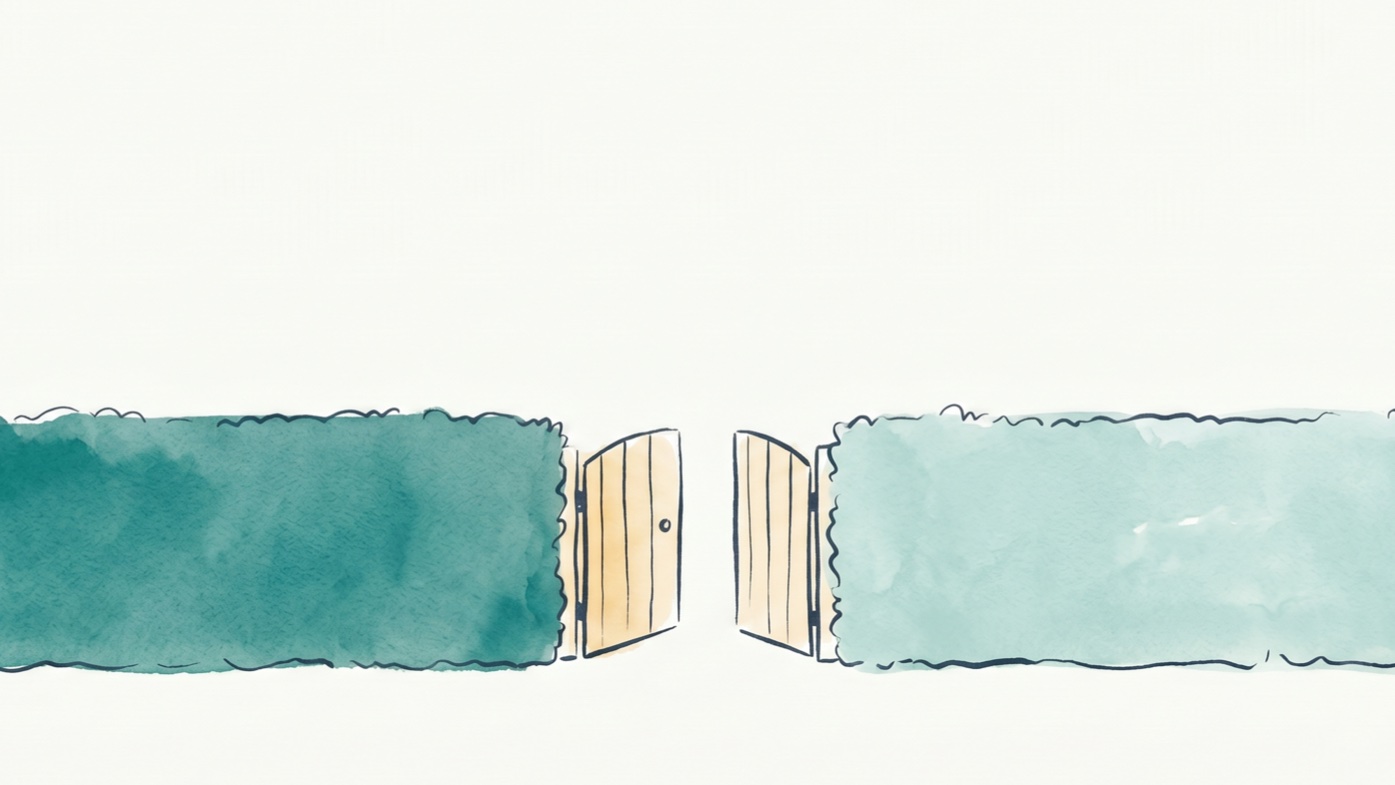
Boundaries have become a buzzword — invoked so broadly that they've lost clarity. People use "boundary" when they mean preference, rule, ultimatum, or sometimes just "thing I want." So let's strip it back to what boundaries actually are, what they look like in a real relationship, and how to know whether yours are healthy or harmful.
What Boundaries Actually Are
A boundary is a limit you set to protect your own wellbeing. Not to control someone else's behaviour — to define what you will and won't accept, and what you'll do if that limit is crossed.
The distinction matters. "You can't talk to other women" is not a boundary — it's a rule imposed on another person's behaviour. "If you maintain a secretive relationship with someone that makes me uncomfortable and refuse to discuss it, I'll need to reconsider this relationship" is a boundary — it defines your limit and your response.
Boundaries are about YOU: what you need, what you'll tolerate, what you'll do. Rules are about THEM: what they must do, what they're allowed to do. Healthy relationships have boundaries. Controlling relationships have rules disguised as boundaries.
The Categories
Boundaries exist across multiple dimensions of a relationship. Most people only think about one or two — but having clarity across all of them prevents the slow erosion of needs that causes long-term resentment.
Physical boundaries. Your body, your space, your possessions. How much physical affection you're comfortable with in public. Whether they can use your things without asking. Personal space needs — the amount of physical closeness or solitude you need to feel comfortable. These sound obvious until they're violated: a partner who grabs your phone without asking, who touches you in ways you've said you don't like, or who invades your personal space when you need distance.
Emotional boundaries. What emotional weight you can carry and what you can't. You can support your partner through a hard time without becoming their therapist. You can listen to their problems without taking them on as your own. You can care about their feelings without being responsible for managing them. The boundary is between empathy (healthy) and enmeshment (unhealthy).
Time boundaries. How you spend your time, including time apart. You're allowed to have evenings that are yours. You're allowed to have hobbies they don't share. You're allowed to see friends without them. A partner who needs to be included in every activity, or who makes you feel guilty for time spent without them, is crossing a time boundary.
Digital boundaries. Phone privacy, social media, shared passwords. You're allowed to have private text conversations. You're allowed to maintain your own social media presence. You're allowed to have a password on your phone without it meaning you're hiding something. These boundaries are newer and more contested — many couples haven't discussed them explicitly, which creates friction when assumptions differ.
Financial boundaries. How money is handled between you. What you'll share and what remains individual. Spending limits that require discussion. Whether lending money to family is acceptable. Financial boundaries are often the least discussed and the most emotionally charged.
Sexual boundaries. What you're comfortable with and what you're not. These can change over time and they can be different from what you were comfortable with in previous relationships. Sexual boundaries require ongoing communication because assumptions are dangerous and consent isn't a one-time conversation.
How healthy are your relationship boundaries? Take our free quiz for personalised insights. Explore →
What Healthy Boundaries Look Like in Practice
Healthy boundaries share specific characteristics:
They're communicated clearly. A boundary your partner doesn't know about isn't a boundary — it's a trap. "I need 30 minutes alone when I get home from work before I'm ready to talk about the day" communicated in advance is a boundary. Silently resenting them for talking to you the moment you walk in the door is a violation they can't avoid because they don't know it exists.
They're consistent. If your boundary is "don't read my texts" but you regularly read theirs, the boundary isn't a principle — it's a double standard. Consistency builds credibility. Inconsistency builds confusion and resentment.
They're flexible but firm. Rigid boundaries that can never bend in any circumstance become walls that prevent intimacy. Boundaries that bend every time they're tested are just suggestions. Healthy is in between: firm enough that your partner knows you mean it, flexible enough that extraordinary circumstances can be accommodated with mutual agreement.
They're about protection, not punishment. "I need space after a fight" is protective — it prevents you from saying things you'll regret. "I'm not talking to you until you apologise" is punitive — it uses withdrawal as leverage. The line between these two looks subtle from the outside but feels entirely different from the inside.
They apply equally. Any boundary you set should be one you're willing to live by yourself. If you expect phone privacy, you extend phone privacy. If you need alone time, you don't guilt them about needing theirs. Reciprocity isn't just fair — it's what makes boundaries credible.
Boundaries You Should Have But Might Not
Some boundaries are so fundamental that people don't think to articulate them — until they're violated:
The right to say no without explanation. You don't owe a reason for every "no." Not wanting to is a complete reason. A partner who demands justification for every refusal is eroding your autonomy.
The right to change your mind. Consenting to something once doesn't mean consenting to it forever. Wanting something last month doesn't mean wanting it today. Your boundaries can evolve — and a partner who holds you to a previous version of your limits ("but you said yes before") isn't respecting you.
The right to feel what you feel. "You shouldn't be upset about that" is a boundary violation. Your emotional responses are yours. A partner can disagree with your assessment. They can't invalidate your feeling.
The right to have relationships outside the partnership. Friends, family, colleagues, hobbies, communities. You existed as an individual before this relationship, and maintaining that individuality isn't a betrayal of the partnership — it's a requirement for its health.
When "Boundaries" Aren't Really Boundaries
Some things get called boundaries that are actually controlling behaviours:
"My boundary is that you can't be friends with men/women." That's a rule imposed on their behaviour, not a limit protecting your wellbeing. A real boundary would be: "I need transparency about friendships that make me uncomfortable. If I can't have that, I need to evaluate whether this relationship feels safe for me."
"My boundary is that you have to tell me where you are at all times." That's surveillance. A real boundary: "I need to feel secure in this relationship. Can we talk about what that looks like for both of us?"
The test: does this "boundary" restrict THEIR behaviour, or does it define YOUR limit? If it controls them, it's a rule. If it protects you, it's a boundary.
Key Takeaways:
- Boundaries protect you. Rules control them. Know the difference.
- Categories: physical, emotional, time, digital, financial, sexual. Have clarity across all of them.
- Healthy boundaries are communicated clearly, consistent, flexible but firm, protective not punitive, and equally applied.
- You have the right to say no without explanation, change your mind, feel what you feel, and have relationships outside the partnership.
- If a "boundary" restricts their behaviour rather than defining your limit — it's control, not a boundary.
Related Articles:
Related articles
Your Partner Keeps Crossing Your Boundaries — What Now
You set the boundary. They keep crossing it. Here's what to do when words aren't working.
Boundaries With Exes — What's Reasonable
Your partner still talks to their ex. Or you do. Here's how to set reasonable boundaries around ex contact.
Boundaries With In-Laws and Family
When family gets too involved in your relationship, boundaries become essential. Here's how to set them.
How to Set Boundaries Without Starting a Fight
Setting a boundary feels confrontational. It doesn't have to be. Here's how to communicate your limits clearly and calmly.