
How to Discuss Past Relationships With Your Partner
How much should you share about your exes? Here's how to navigate the past-relationship conversation honestly.
Reviewed by certified relationship advisors
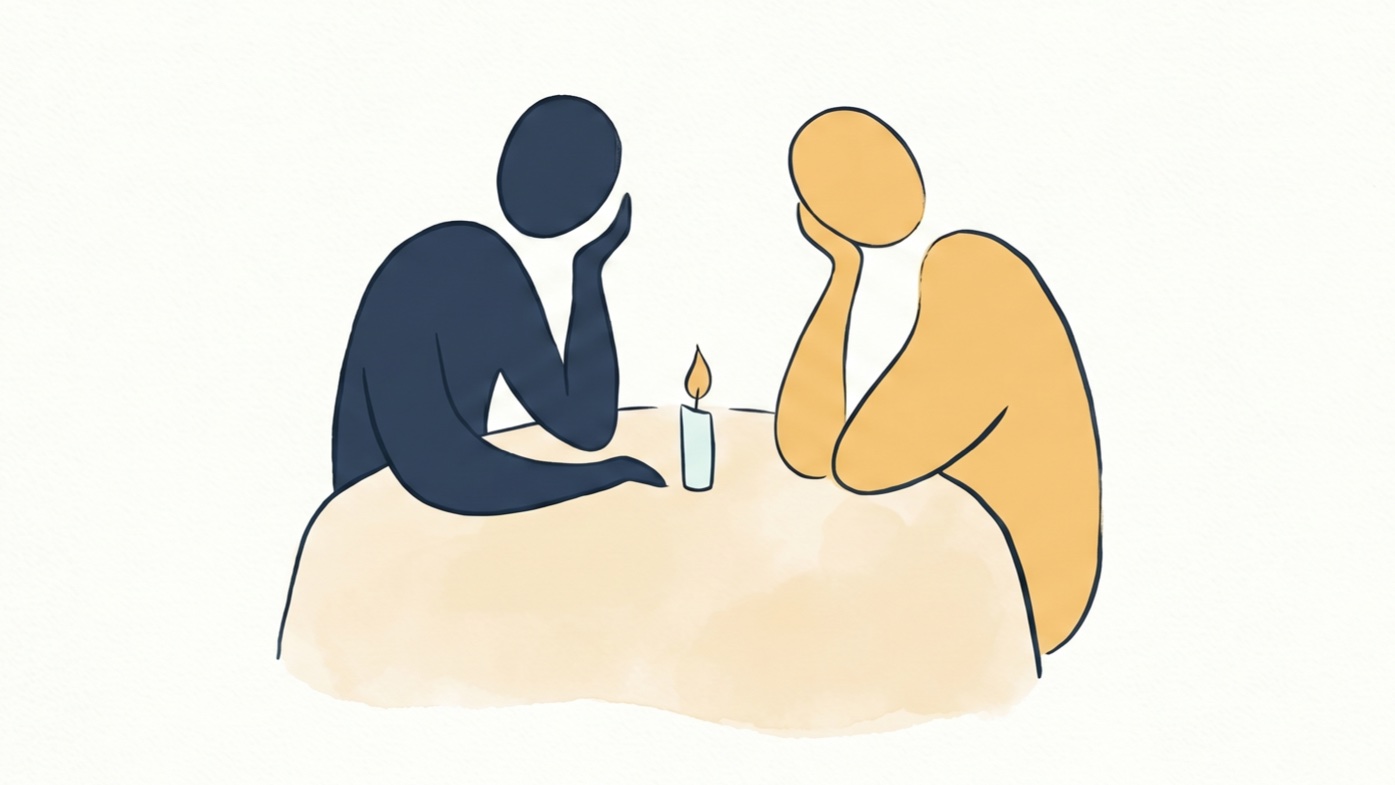
At some point in every new relationship, the past comes up. Maybe they ask directly. Maybe a name slips out. Maybe you're watching a movie about divorce and suddenly the room gets quiet. However it arrives, the "ex conversation" is coming — and how you handle it matters more than most people realise.
The question isn't whether to discuss past relationships. It's how much to share, what's useful, and what's just handing your current partner ammunition for future insecurity.
What Your Partner Is Actually Asking
When your partner asks about your ex, they're rarely asking for a comprehensive history. They're asking three underlying questions: "Am I safe?" (You won't repeat what went wrong before.) "Am I special?" (What we have is different from what you had.) "Is it over?" (You're fully here, not still emotionally elsewhere.)
Understanding these underlying questions helps you answer in ways that address their actual needs rather than providing an autobiography they didn't request.
The Useful Information
Some things about your past relationships are genuinely helpful for your current partner to know:
How it ended and what you learned. Not the dramatic details — the insight. "My last relationship ended because we couldn't communicate about money, and I've learned that I need to have those conversations early." This shows self-awareness and signals growth.
Deal-breakers you discovered. "I learned that I can't be with someone who doesn't prioritise time together." This helps your current partner understand your non-negotiables — which is information they need.
Your attachment style and patterns. "I tend to pull away when I'm overwhelmed — I've learned that about myself and I'm working on communicating instead of retreating." This gives your partner context for your behaviour that they'd otherwise misinterpret.
Anything that affects your current relationship. Past trauma that creates triggers. Trust damage from infidelity. Patterns you're consciously trying to break. Your partner needs to know what they're dealing with — not to fix you, but to understand you.
What to Keep to Yourself
Detailed comparisons. "My ex was better at cooking / worse in bed / more adventurous / less attractive." No comparison benefits your current partner. Every comparison creates either insecurity or competition — neither of which serves the relationship.
The forensic timeline. They don't need to know every date, every argument, every milestone. "We were together three years and it ended because we wanted different things" is sufficient. A month-by-month recounting creates mental imagery your partner can't unsee.
Sexual details. What you did, how often, what was good, what wasn't. Your sexual history is yours. Your current sexual relationship is shared. The bridge between them doesn't need to be spelled out.
Anything that would make them feel compared. "My ex used to do this thing that I loved..." Even innocently shared, this creates a standard your current partner feels measured against. Share what you want and need in the present — not what you had and lost in the past.
How healthy is your communication? Take our free quiz for personalised insights. Explore →
When They Ask More Than You Want to Share
You're entitled to privacy about your past. "I'd rather not go into the specifics of that" is a complete, valid answer. You can share the lesson without sharing the story.
If they push: "I understand you're curious. I've shared what I think is important for us. The details of my past are mine, and I'd rather focus on building our present." This sets a boundary without being defensive.
If they push aggressively or repeatedly, that's worth examining. Excessive curiosity about your past can indicate retroactive jealousy — a pattern where your partner becomes obsessively preoccupied with your romantic history, often imagining scenes and demanding increasingly specific details. This isn't healthy curiosity. It's an anxiety disorder wearing the mask of interest, and it doesn't improve with more information — it gets worse.
When You Should Worry About How They Handle It
Pay attention to what they do with the information you share. A mature partner hears about your past, integrates it, and moves forward. An insecure partner weaponises it — bringing up your ex during arguments, comparing themselves unfavourably, or using your disclosures as evidence of your character flaws.
If you shared something vulnerable about a past relationship and it later shows up as a weapon in a fight — that's a serious red flag about the current relationship, not a problem with your disclosure. Information shared in trust should be held in trust.
Talking About Your Own Ex vs Hearing About Theirs
The conversation goes both ways. When your partner shares about their past, listen with the same generosity you'd want from them. Don't interrogate for details you don't need. Don't compare yourself to their ex. Don't catastrophise about lingering feelings.
If hearing about their ex triggers uncomfortable feelings, that's normal — but the feelings are yours to manage, not theirs to prevent. "I know this is irrational, but hearing about your ex makes me a little uneasy. I'm working on it — can you just be mindful about how much detail you share?" This is honest, non-controlling, and takes responsibility for your own emotional response.
Key Takeaways:
- Your partner is really asking: "Am I safe? Am I special? Is it over?" Answer those underlying questions.
- Share lessons and patterns. Keep details, comparisons, and sexual history to yourself.
- You're entitled to privacy about your past. "I'd rather not go into specifics" is valid.
- Watch how they handle what you share. If it's weaponised in future arguments, that's a red flag.
- When hearing about their past: listen generously, don't compare, manage your own reactions.
Related Articles:
Related articles
How to Bring Up Something That's Bothering You
Something's been eating at you but you don't know how to say it. Here's a framework for bringing up concerns without starting a war.
How to Talk About the Future Without Scaring Them Off
You want to know where this is going — but asking feels risky. Here's how to talk about the future without pressuring.
How to Talk About Money in a Relationship
Money is one of the top sources of relationship conflict. Here's how to talk about finances without judgment, shame, or resentment.
How to Tell Your Partner You're Unhappy
You're unhappy in the relationship but don't know how to say it without it sounding like 'I want to break up.' Here's how.